Showing posts with label writing. Show all posts

Thursday, 4 April 2013

Told by an Idiot

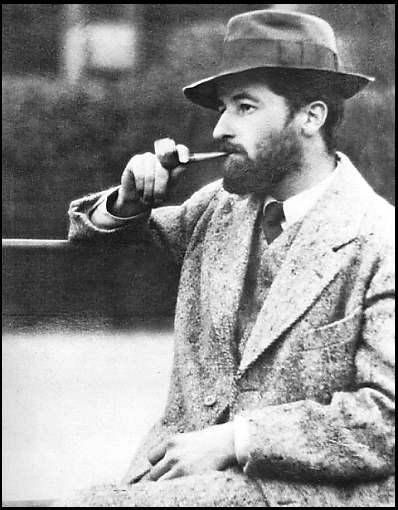
Faulkner in Paris 1925 by WC Odiorne

   I never know what I think about something until I read what I’ve written on it. These humble words of American writer William Faulkner resound with the depth and sensitivity of his novel and short story writing.
   It made me wonder, is it because their thoughts are only clarified in writing, that writers feel compelled to write. Maybe that’s why many writers are not good at self-promotion and talking up their novels on promo tours. You need the gift of the gab to be an effective salesperson; do writers have the gift of the written word instead.
   When I first read Faulkner’s, The Sound and the Fury, I remember closing the last page and thinking, wow, how did he do that. It was one of those profoundly moving novels that imprint themselves on the psyche; long after you’ve forgotten the plot details, you remember that moment of revelation; this writer is different to everyone I have read before. I think it inspired me in many ways to want to be a writer myself.
   The novel is about the Compson family in a fictional southern county of the USA and is told from four different perspectives, each equally convincing. Faulkner’s ability to feel and then relate events from different points of view marked him as a future Nobel in Literature winner. It also indicated a lack of ego, something useful in a writer, but not so useful on a publicity tour. Though having said that, I have met many successful writers with massive egos.
   Faulkner also advised to write from the heart about things that matter, like Shakespeare did. That’s why the universal truths in Shakespeare’s plays still resonate. That search for significance and meaning in existence takes time to construct.
   As writers weave ideas from heart and mind to the page, shape-shifting thoughts into sentences, rewinding passages and playing them over again, their thoughts eventually clarify and what they really think emerges.
  Writers seek more than an instant opinion which is all too often told by an idiot, full of sound and fury, signifying nothing.

Tuesday, 25 September 2012

How writers write


     Vladislav Bajac’s novel, Hamam Balkania, provides a thought provoking introduction on the writing process.  ‘The writer’s problem,’ he says, ‘one of countless others, is that they often confuse reality and imagination. That is the source of the famous loss of the boundary between what happened and what was experienced.’
     On character he says: ‘That is how I began to temporarily mix my encounters with people close to me; I want to say, I brought those who lived five centuries before me closer to my own time, and transferred myself and my friends (or characters) with ease into lives centuries older than we are.’
     That philosophy should be read before commencing to write. It will help to set you on the right path. I would love to hear other writers comments on the writing process.

Wednesday, 13 June 2012

Which is your favourite book?


    How many times have you been asked that question? I'm always surprised when people name a certain author or novel as their benchmark reading experience because my favourite novel is usually the one I'm reading at the time.
    I don't even have a favourite genre as it all depends on how a novel is written and the subject matter which combined,  make it enjoyable.

The Blurb

    In just the last twelve months, so many books have delighted me with their freshness and cleverness.  Marcus Zusak's, The Book Thief, must come as close as any book ever has to being a favourite. The beautiful, simple prose is incredibly moving and like all great literature, it is about what it means to be human. It is also about being a reader and a writer, one of my favourite combos.
    But inevitably, once a book is finished I move on to the next experience. So although Zusak will stay with me, I'm now involved in Peter Ackroyd's, The Clerkenwell Tales, a scholarly race through London streets in 1399. These stories of spies, friars, nuns and secret societies are richly imagined and strange, yet so realistic you could be one of their neighbours living in the shadows of St Paul's. I have lived and worked around Clerkenwell, so although the writing is intriguing, my familiarity with the setting also draws me in.
    That's often why I find myself scouring the shelves of my London library for Australian writers. Sometimes it is the desire to return to your roots that makes a story particularly enticing. I read Bryce Courtney's, The Potato Factory while here in the UK. I had spurned it when living in Australia but feeling homesick and looking for something familiar, I enjoyed the history and settings of London and Van Dieman's Land.
    Many readers heading off on holiday like to take Lorca to Spain, Michener's, South Pacific to Vanuatu, or Lampedusa to Sicily because it gives both their holiday and their reading another dimension in time and place. To take Jane Austen to the Kalahari, for example, would not do justice to either the work itself or to the desert. On a Nile cruise, Agatha Christie may turn into your favourite author.
    It takes all sorts to make a book memorable, to have significance for the reader and to make it a favourite. I don't think I could settle for just one.